

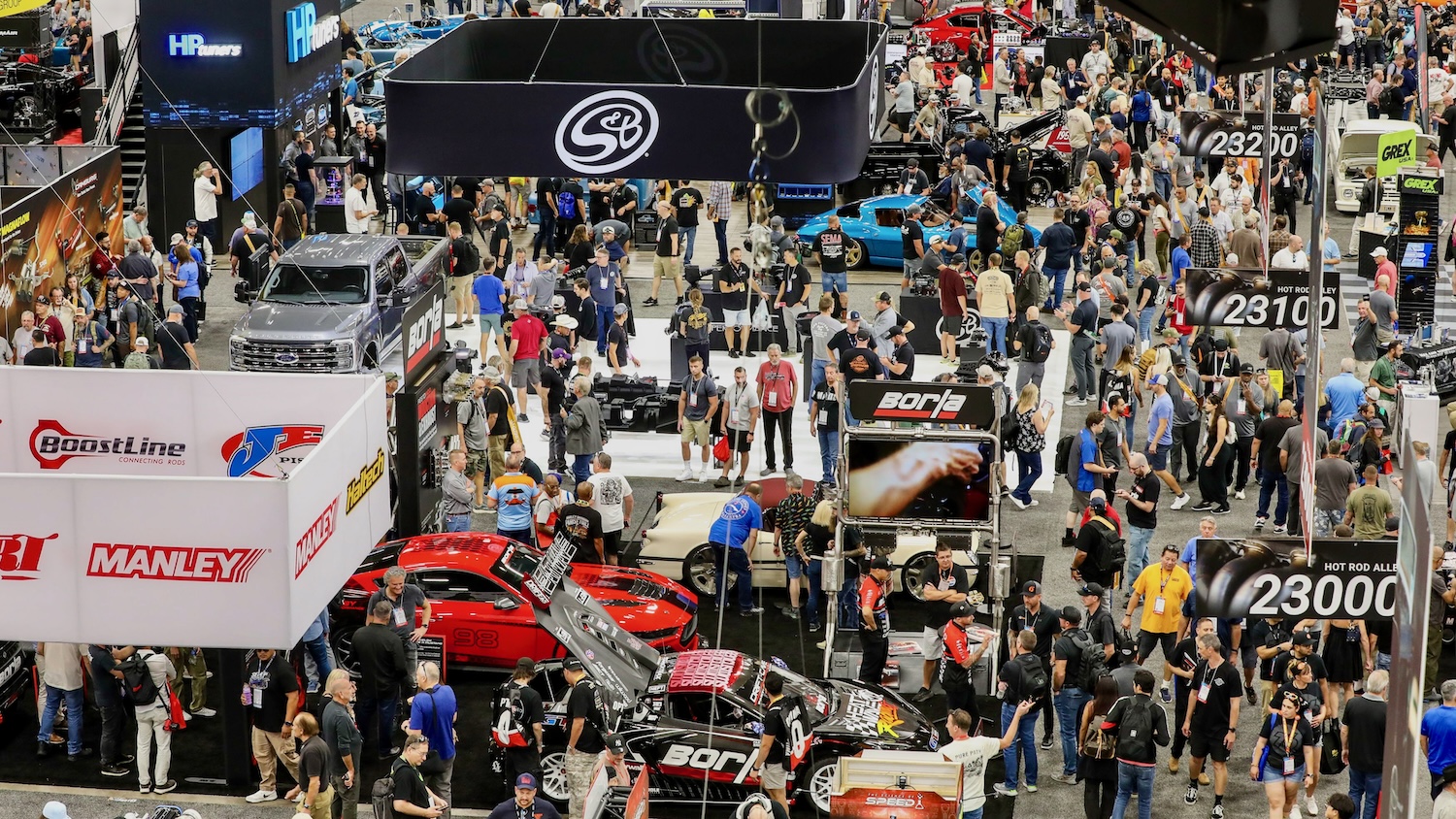
SEMA, the annual November gearhead spectacle held in Las Vegas, is known mostly for hundreds of sensational custom-car builds that are on display; yet, the country’s largest trade gathering of aftermarket manufacturers, fabricators, OEMs, automotive retailers and more is also a showcase for new products that serve all segments of the industry. Products unveiled at SEMA often set the tone for global trends in performance and vehicle personalization.
With miles of aisles packed with new products or prototypes–often installed on really cool cars in the booth–it’s quite difficult to see every new or interesting part in the four days of the show. However, these five engine-performance and racing items caught our attention and are worth a second look.

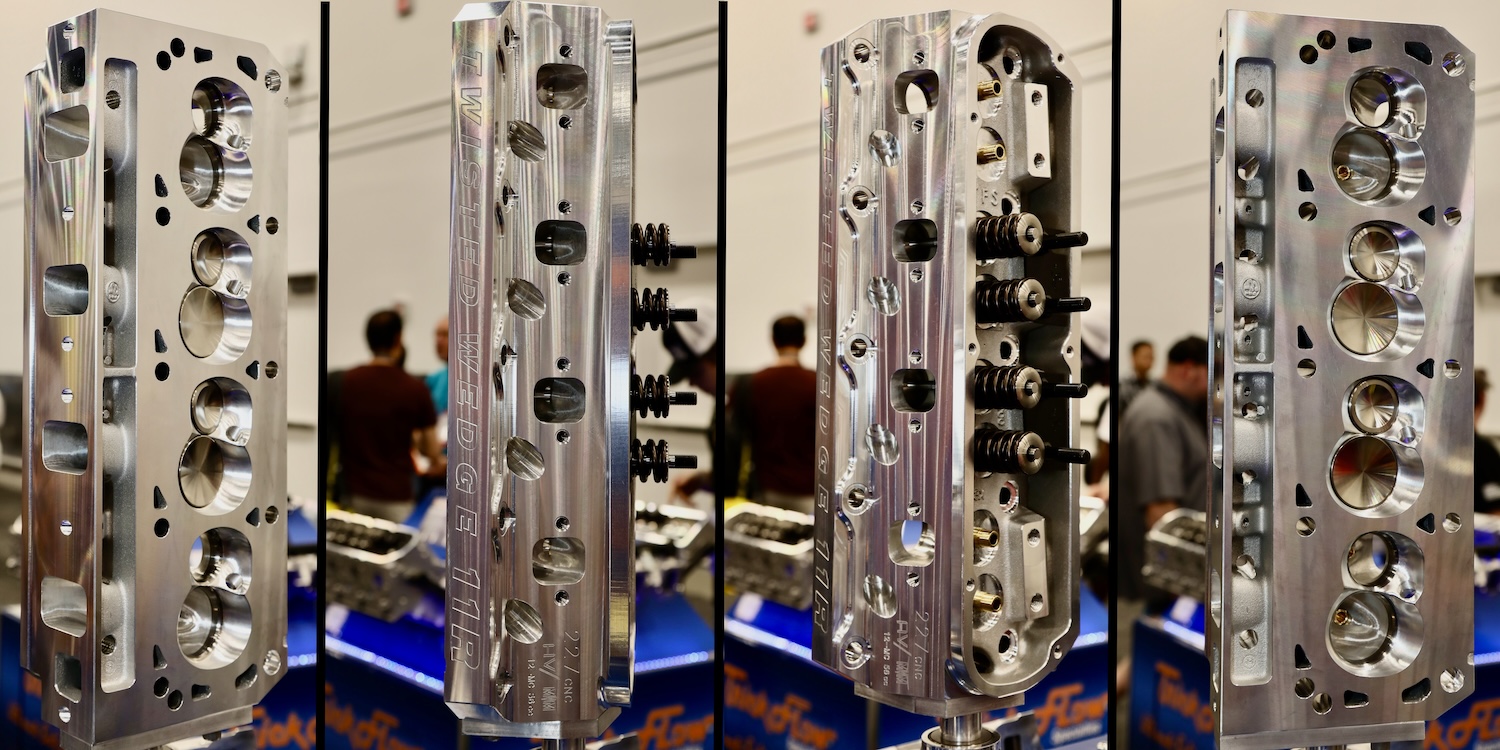
Trick Flow Twisted Wedge 227cc 11R SBF cylinder heads
Just about every new speed part these days is designed with the possibility that the engine builder will use it in a power-adder application. That strategy is evident in the 11R 227 Twisted Wedge cylinder head from Trick Flow.
“There’s a 66cc combustion chamber option for power adders,” notes Harold Miller, sales and customer service team leader at Trick Flow. “Then there’s the standard 56cc chamber. These chambers are really efficient. You can get away with 12:1 on pump gas.”
The 11R series is highly respected among Ford small-block enthusiasts with it unique valve location that moves the intake valve away from the cylinder wall to reduce shrouding. There’s also a shallow 11-degree intake-valve angle to improve piston-to-valve clearance. The 227 is the largest of the series with 227cc intake runners. Other features of this CNC-machined head include 66cc exhaust runners, 2.080/1.600 stainless-steel valves, PAC Racing dual valve springs and titanium retainers. The 227 heads are rated at 342cfm at .650-inch lift on the intake and 229cfm at .650-inch lift on the exhaust side.
With the release of the 11R 227, Trick Flow also developed a port-matched single-plane intake manifold. This cast aluminum intake features a 4150 carb-flange footprint, a raised plenum floor and integral bosses for adding nitrous. Or the intake can be ordered to accept EFI port injection.
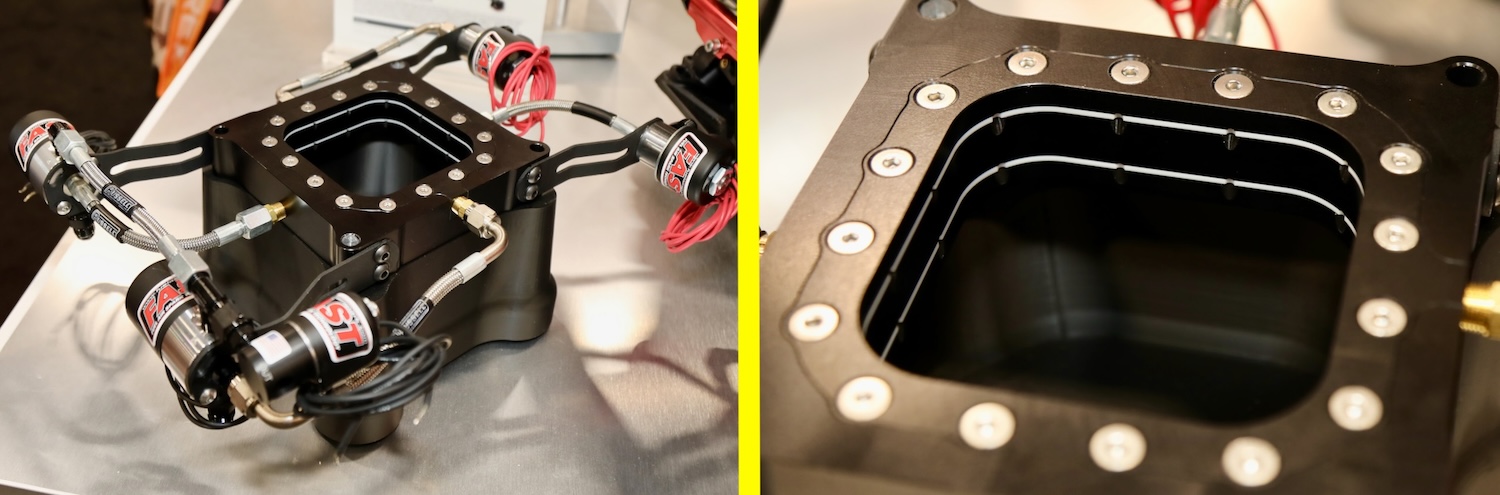
FAST 4500 dual-stage nitrous plate system
Leveraging the Perimeter Injection technology first introduced by ZEX, the all-new 4500 dual-stage nitrous plate from Fuel Air Spark Technology (FAST) offers racers more flexibility in setting up a power-adder application.
“There are 24 total injection points,” explains Greg Burgess, product development manager with the Edelbrock Group. “The bottom stage is completely separate from the top. If you want a 50 or 150 below, and after X-amount of time you can do 300 with the top stage. Or you can do a full dump: 400 on the top and 400 on the bottom.”
The FAST nitrous plate also features direct solenoid mounts, minimizing system height and simplifying installation. There are two nitrous and two fuel solenoids, along with a purge valve. All the lines and fittings are made by Russell. The plates are designed so that the nitrous and fuel meet at the injection points, much like a fogger nozzle. “These injection points are directional to the runners, which is really neat,” adds Burgess.
FAST is also introducing a similar dual-plate system with a 4150 footprint. Both systems are available as a kit with a 15-pound bottle.

Boostline Ford 7.3L Godzilla connecting rods
Godzilla is the pushrod V8 that Ford engine builders have longed craved for, and quite honestly, it should be more popular in racing than what’s currently running in sporadic applications around motorsports. Yet, the aftermarket remains committed to the platform, as demonstrated by the release of these forged 4340 steel rods from Boostline.
“We’ve added 30 percent more strength to allow for power adders,” says Jason Gordon. “We redesigned the pockets and added more material where needed.”
The rods feature updated V2 Boostline architecture with the patented three-pocket beam design. The rods come with ARP 2000 fasteners, and there’s an optional L19 upgrade.
Boostline also showed off a new lightweight rod design intended for high-horsepower naturally aspirated applications, especially circle track, road racing and endurance racing. These feature a multi-pocket design to help distribute the loads more evenly. Also constructed from 4340 steel, the rods come with ARP 2000 fasteners with an optional 625+ upgrade. Finally, Boostline provides a comprehensive inspection report after each rod undergoes a 25-point CMM inspection.
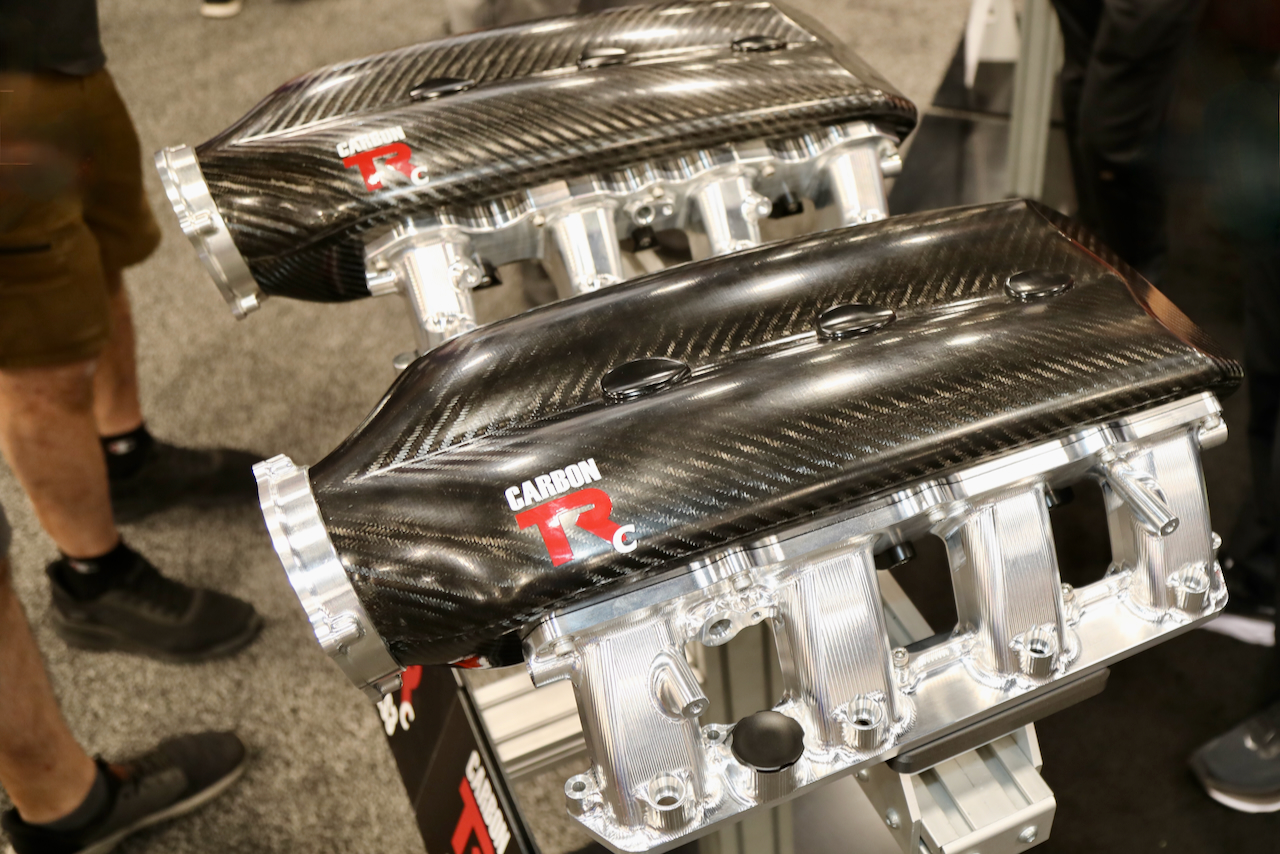
Performance Design Carbon TRc intake manifold for Gen III Hemi engines
The familiar double-bubble plenum of the Carbon TRc intake from Performance Design is now available for Gen III Hemi engines. The TRc is a classic under-the-hood, short-runner design that incorporates a carbon-fiber plenum with billet-aluminum runners. The result is both elegant and functional.
“It’s a boost-focused manifold,” stresses company founder Caleb Newman. “We tested it from full vacuum to 30 psi, 50,000 cycles at an elevated temperature. Then tested it up to 60 psi for 5,000 cycles.”
The intake features 155mm intake runners machined from 6061-T6 billet aluminum. The plenum volume is a generous 10-liters, and the throttle bore diameter is 108mm with a bolt pattern of either the Hellcat or a Nick Williams throttle body. Nitrous bosses are available in the runners, and port fuel-injector provisions are made using OEM Hellcat injectors.
The Intake manifold is often the centerpiece and visual skyline of the engine. It communicates the engine’s purpose, and the TRc is certainly offers one of the most vocal commentaries and creative expressions available for the Hemi.
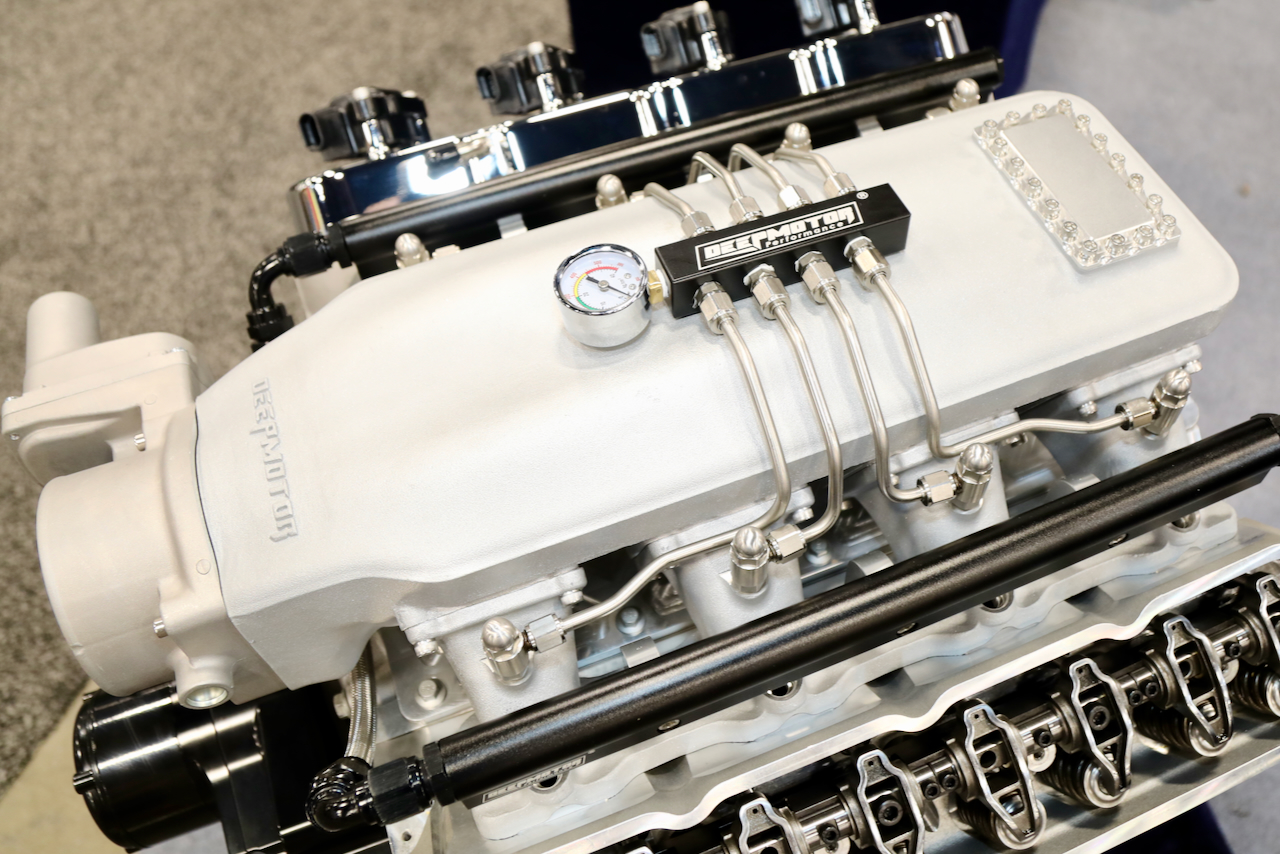
DeepMotor port-mounted methanol injection system
DeepMotor offers a wide range of billet and cast intake manifolds, and the company also manufactures a port-mounted water/methanol injection system for select LS, LT and Gen III Hemi intakes.
The benefits of water/methanol injection in boosted applications are rarely debated. Cooler air charge and knock suppression are top on the list. Where to inject the mixture is often debated. Injecting at the throttle or even earlier in a turbo setup is relatively inexpensive, but fuel distribution isn’t always perfect. Port injection gives the engine builder more control, but the setup is more expensive and harder to tune.
The DeepMotor kits are pre-plumbed for specific intake manifolds and feature an on-demand progressive controller that monitors manifold pressure up to 35 psi.
“More psi, more flow,” says Yong Wei, adding that the kit includes storage reservoir, pump, MAP sensor, wiring, plumbing and hardware.