

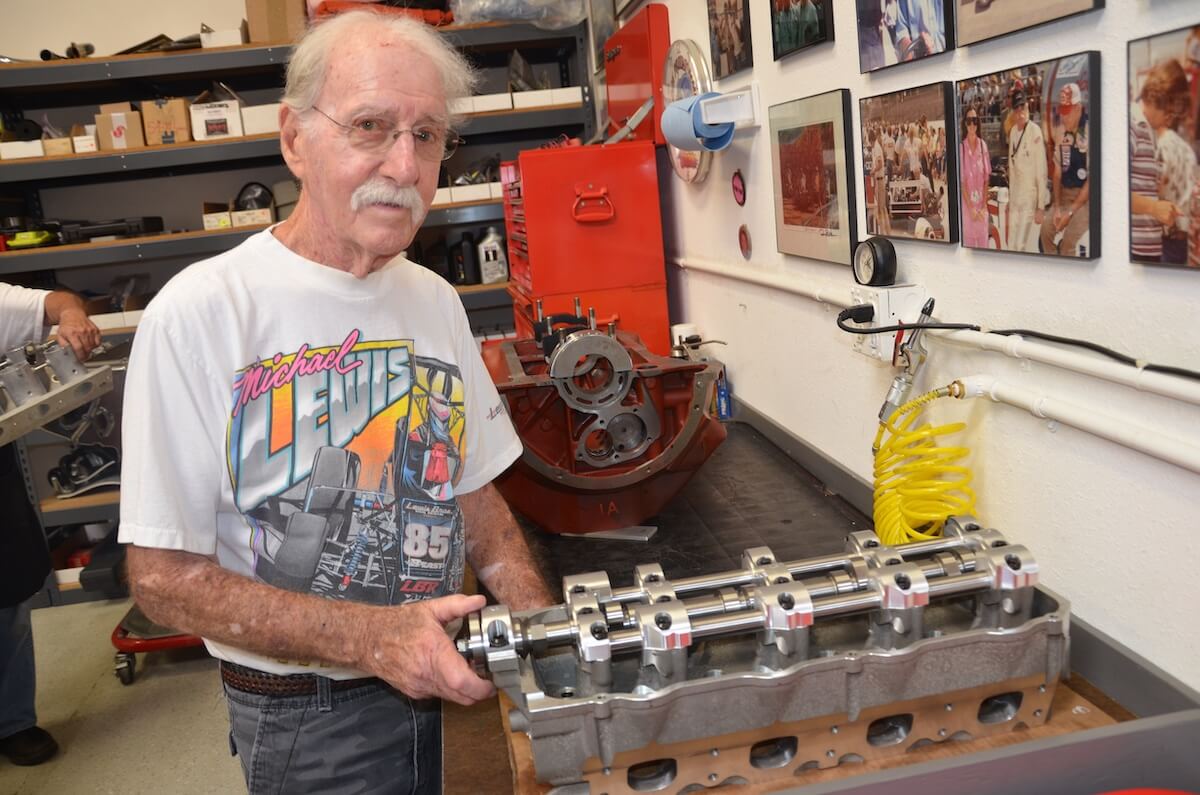
Early in his autobiography, Ed Pink laid out the strategy that has led to the long-term success of his engine-building operation.
“There are two ways to sell engines to racers,” he writes on page 81 of the recently published hardcover memoir, Ed Pink: The Old Master. “One is to price yourself cheaper than the next builder; the other is to make your stuff better than anyone else’s. I did not take the first route.”

Not only did Pink make his engines better than the competition, he may have experienced the most diverse and rewarding life story of anyone in the racing industry. His book reads like a Who’s Who of motorsports, working with wide array of winning owners, drivers, mechanics and officials. The list of honors he’s been awarded and the hall of fames (see video below) into which he’s been inducted are testament to a career of getting his customers into the winner’s circle.

Pink’s autobiography, which was written with Bones Bourcier, is a thorough account of his life, written chronologically in brief capsules that each tells a story. When added up, these compact but revealing accounts add up to a fulfilling narrative. The tone is very conversational, yet tightly edited for a quick pace. Reading Pink’s life story in a single sitting is simply a relaxing and enriching afternoon, and the format allows the reader to easily pick up the story when taking a break.
Perhaps the key turning point in the Pink’s life happened in the early ‘60s when he built an AA/Fuel dragster with the help of numerous friends and sported parts sent to him from Ed Iskenderian and Vic Edelbrock. It was powered by a supercharged 331ci Chrysler. While Pink had raced a roadster in the past, this was the first time he sat in dragster cockpit. With nitro flames shooting out the headers and the engine shaking the shaking the chassis at idle, he realized the difficulty of seeing around the 6-71 supercharger and Hilborn injection.
“The longer I sat there, the idea of blasting this car down a drag strip started looking very different to me,” he writes.
Fortunately for the racing community, Pink turned his full attention to building high-performance engines instead of driving. He started out with only three customers in the beginning: John Mazmanian, Tommy Ivo and Tony Nancy. It was Nancy who suggested he keep campaigning the dragster with another driver as an advertisement for his business.
“You know, Ed, the best way to get these guys to come to you for engines is to beat ‘em enough that they have to come to you,” Nancy told Pink.
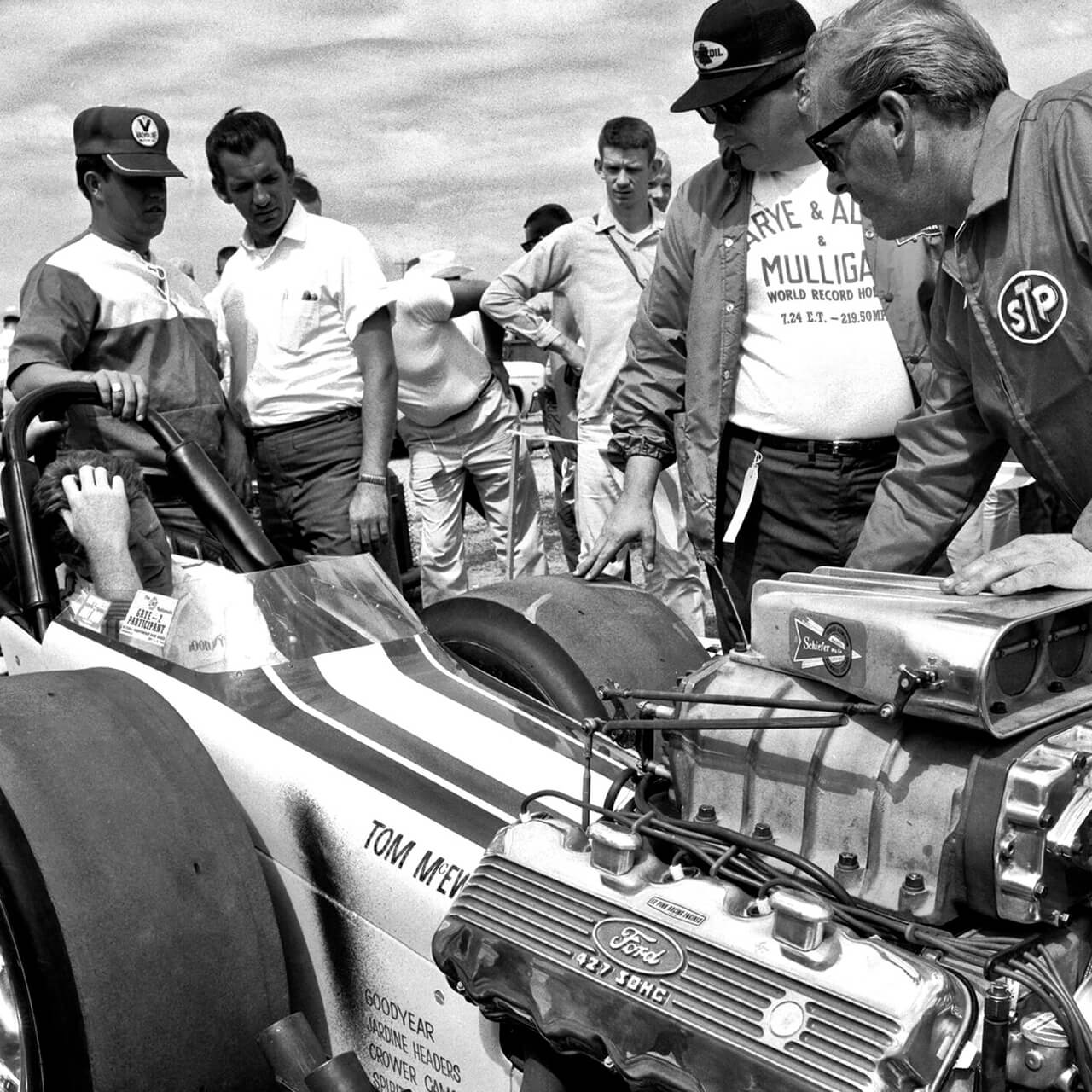
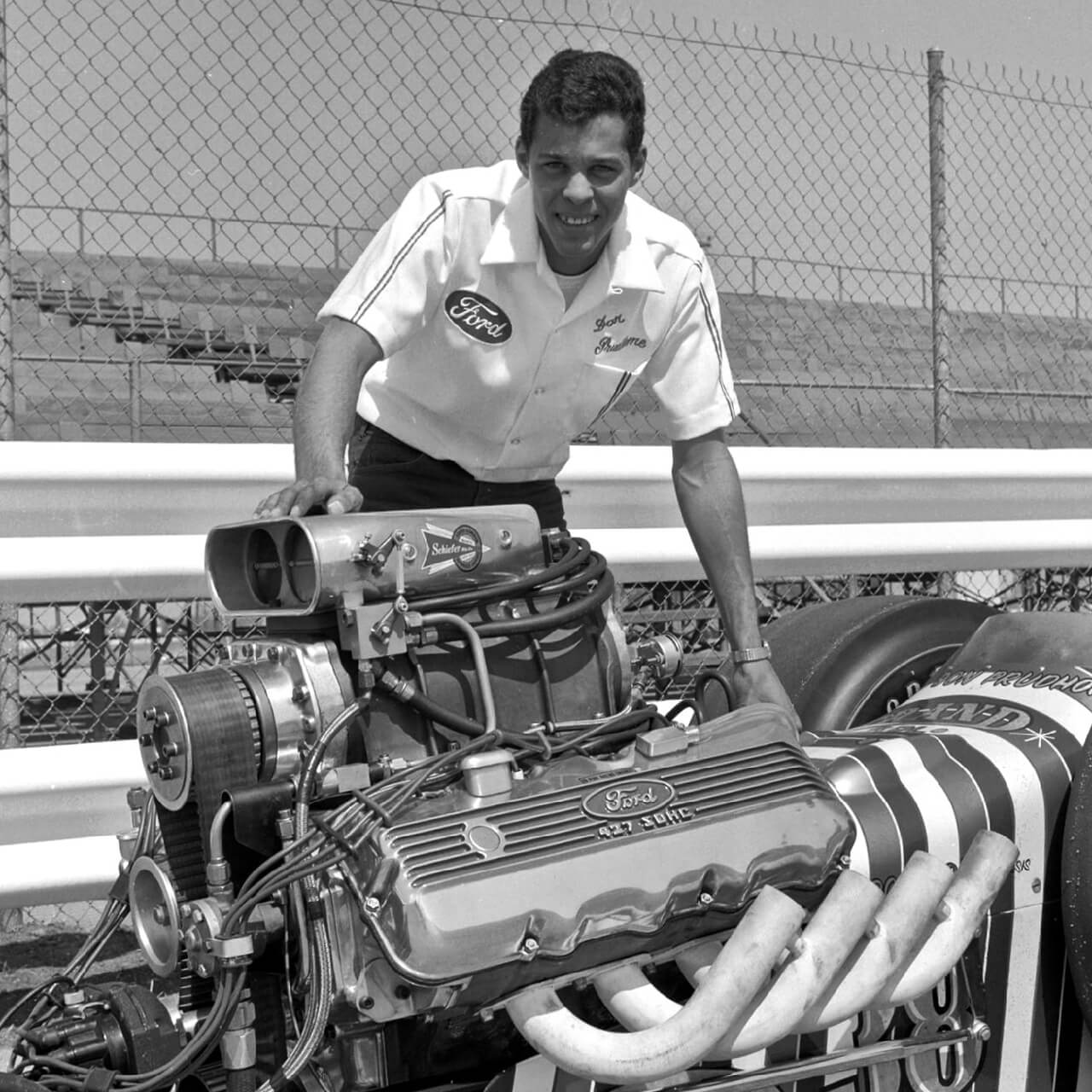
While he got his start and made his name building both Chrysler Hemi and Ford SOHC nitro engines for drag racing, he also scored success at the Indy 500 by improving the Cosworth DFV, then working on the new DFX engine when it came out. He was well known for precise machine work and accurately testing the engines on his dyno. In fact, his take on racing dynos was one of the most poignant lessons learned in the book.
“Engine builders tend to use dynamometers for two reasons,” he says in Chapter 10. “Some use them to carry out and validate their development. Others use them as sales tools, selling their line of snake oil.
“At some point, you have to go to the track,” he continues. “That’s where the truth comes out.”
If there’s one letdown of the book, it’s that Pink doesn’t provide many technical details about his builds. For example, when nitro teams became comfortable with the 426 Hemi, they were afraid to try any new tricks.
“But I always tried to keep an open mind,” he recalls. “At some stage, I decided that the Hemi could be improved upon.”

Working with Don Schumacher’s Funny Car team, Pink made a “major breakthrough on the configuration of the Hemi.” He says he changed just about everything on the engine that could be changed, including the camshaft, crankshaft stroke, compression ratio, piston design, connecting-rod length, ignition timing and fuel distribution.
But inquisitive minds would really like to know more details on these changes. Also, what was the strategy behind the changes. Were there three or four at once? Or did he test each one before moving on? What were the setbacks? What were the challenges getting the suppliers to build the new parts?
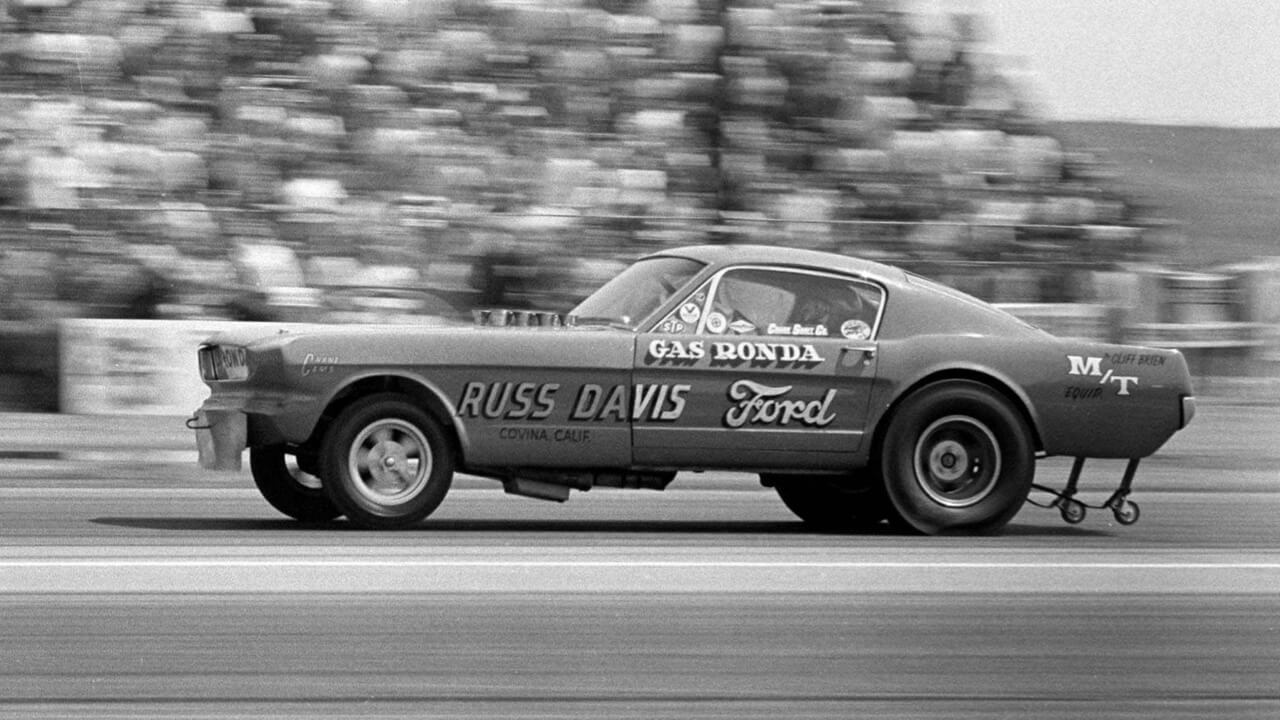
It’s not that Pink afraid of exposing secrets, it’s just he chooses to share stories about family, life and relationships with customers, racers and others in the industry. There are plenty of other outlets where Pink has talked in more technical terms. His autobiography is more about commentary and offering a perspective of motorsports at a place and time that many readers weren’t lucky enough to experience.
Pink had numerous interesting side projects, including building a Hemi for a Lincoln Continental, working with off-road trucks and drag boats, IMSA sports cars and even drift cars. But he seems to have especially enjoyed working with Midgets and Silver Crown engines. Working with PRI founder Steve Lewis, Pink developed a Ford 4-cylinder Midget engine using a Robert Yates cylinder head and new block developed by Joe Fontana. He sourced the best parts possible from Sonny Bryant, CP-Carrillo, Comp and others. He also chose to run an electronic ignition instead of a traditional magneto. The engine captured the pole at its first race and led most of the way before back-marker traffic spoiled a chance for victory on the last lap.
Pink’s Ford engine became a major winner on the Midget circuit, and eventually he was asked to build Silver Crown V8 based on Ford small-block architecture. Then Toyota came calling When Pink was 74 years old and asked him to develop a Midget engine with a cylinder head that had design ties to the automaker’s new NASCAR V8 engine. The engine won its first time out.

If there’s a telling tribute to Pink’s career, it’s that regardless of the engine platform or racing venue, he always made more horsepower. He did it with a combination of innovation, craftsmanship, self-reliance, loyalty to customers and solid work ethics. He was a detail-oriented problem solver who valued reliability as much as torque. In world today of engine specialists dealing with the digital age, he prides himself on having been an engine builder who was always eager to learn.
“I wanted to know an engine from top to bottom,” he sums up, “and keeping my own technology to myself.”
The hardback book is published by Coastal 181 and covers 264 pages. It can be purchased through various specialty outlets like the Lions Automobilia Foundation or directly from edpink.com.
Editor’s update: Ed Pink passed away on April 27, 2025, just a few weeks after I wrote this review. As a Ford enthusiast in my youth, I followed Ed’s career from the Prudhomme-McEwen “think Pink” days. I interviewed Ed a half-dozen or so times and spoke often when seeing him at races or other events. He was always gracious and a source of vast racing and performance knowledge. My last talk with him came after I emailed him a historical question regarding a ‘40s engine that raced at Indy. Within a few minutes I get a phone call. He’s apologizing that he remembers the engine, remembers some of the testing; yet can’t remember some of the specifics I was seeking. Then we just got to talking about other topics. He will be missed not only for his contributions to the sport but for his graciousness. RIP and godspeed.