


Parts survival is a constant battle in the unforgiving world of 11,000-horsepower nitro engines that run in the Top Fuel and Funny Car categories. One of the more costly consumables has been the crankshaft. For years, teams like Kalitta Motorsports cycled through multiple billet-steel crankshafts every race weekend. But when Callies teamed with Kalitta’s crew chiefs, they set out to double that lifespan with a completely different approach—a forging.
“They were not getting much of any life out of the crankshafts,” recalls Callies engineer Nick Norris. “Some were failing after just four passes. Even the better ones only lasted six before showing serious cracks.”
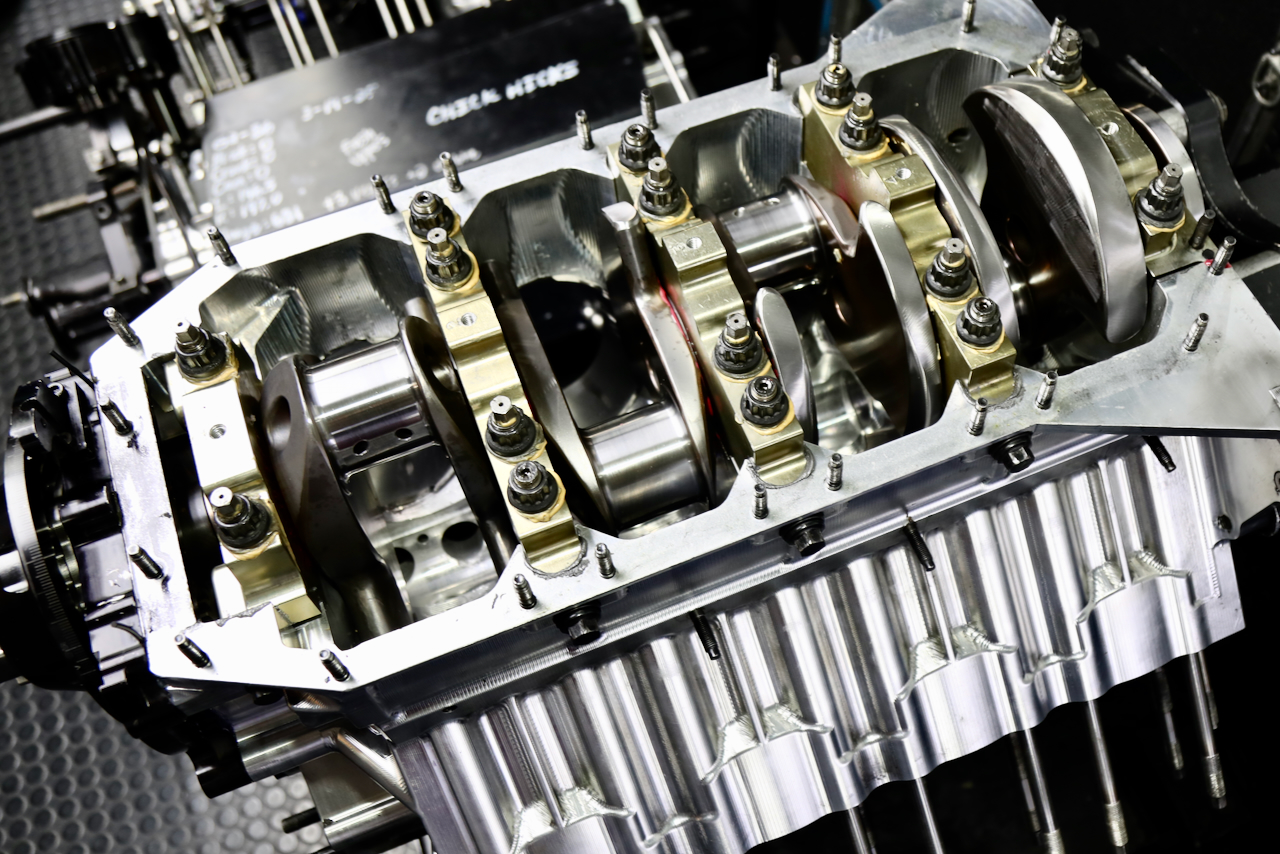
The two operations were in close enough proximity that a collaboration strategy and development program were feasible. The effort started with a traditional approach: machining cranks from 4330V billet-steel blanks and heat treating with Callies’ long-established technique. Initial results were disappointing.

“After just a couple passes, they looked like they were about to twist apart,” Norris admits.
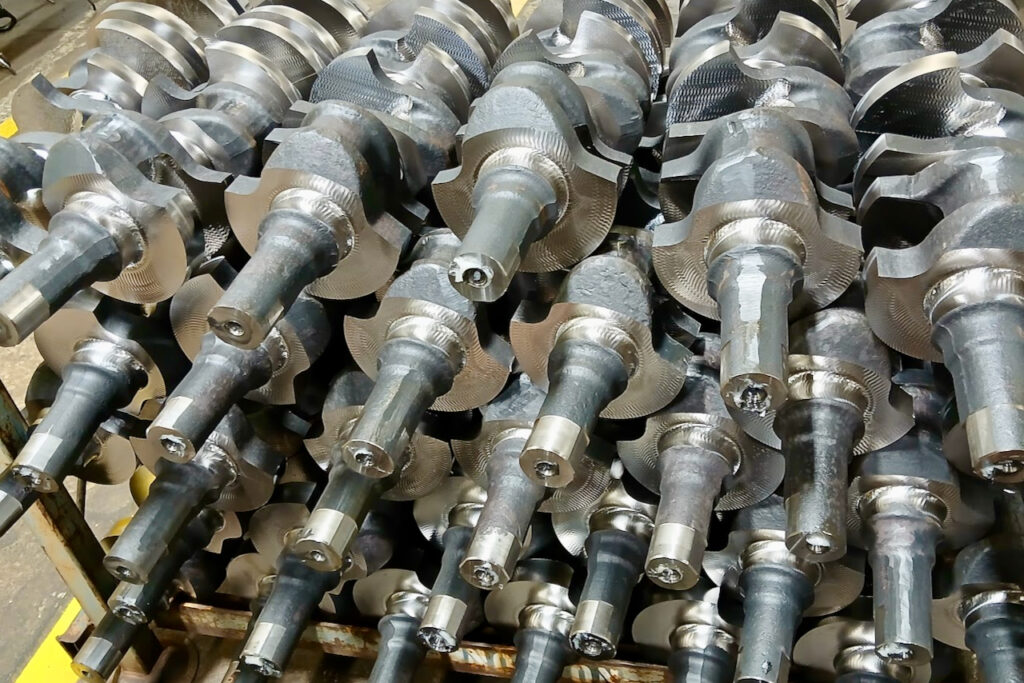
Callies soon recognized that evolving the heat treatment alone wouldn’t solve the problem. The focus then shifted to a forging, which is a more complex, expensive and risky approach—especially when EN30B steel was considered for production. EN30B is not only a stubborn alloy to work with, but it would require forging dies that were likely to wear out quickly or break during production. A pivotal conversation between the late Rick Norton, founder of Callies, and racing legend Connie Kalitta soon provided essential direction for the project.
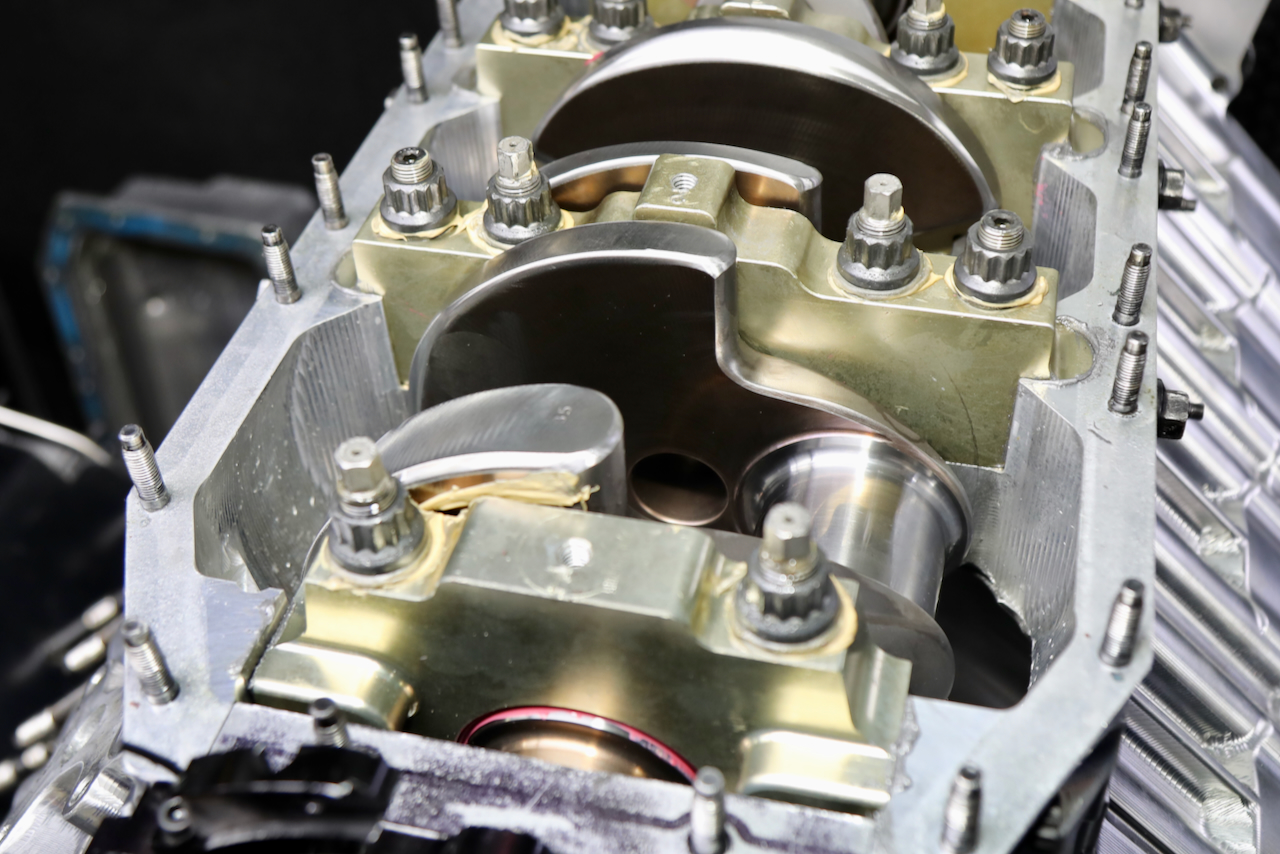

“Connie said a forging is probably the best crankshaft you could make,” says Norris. “And Rick felt strongly about that, too.”
Callies invested in the custom dies and started hammering out test cranks for the Kalitta teams. The lifecycle more than doubled to 12 and 13 passes. “Eventually we saw 16, sometimes even 18 runs,” says Norris.
A big part of the success came from obsessive documentation and evaluation from the testing. Kalitta’s team pulled the crankshafts and shipped them to Callies for inspection after each race. Norris would Magnaflux and photograph each one, cataloging every crack, change in surface or dimensional shift.
“Some cranks came back three or four times. We could watch cracks form, then grow, then finally recommend taking it out of service. That real-world data was invaluable,” he remembers.
Eventually, Kalitta obtained its own Magnaflux machine and continued the protocol in-house. They also sent detailed notes on each pass—whether the car smoked the tires, dropped cylinders or made clean runs. That documentation provided Norris with a deeper insight into how each crank endured the violent loads of a nitro-burning lap down the track.
“When the engine had a happy run, the crankshaft was happy, too,” remembers Norris.
Moving to a forging didn’t resolve every issue. The Callies Top Fuel crank is a non-twist forging, so counterweight placement strategy was critical. Unlike twisted forgings, which offer more design freedom, non-twist forgings must conform to die constraints. That forced a compromise on ideal counterweight geometry because the forging dies require an inherent taper that allows the release of the part from the dies after the intense hammering process.
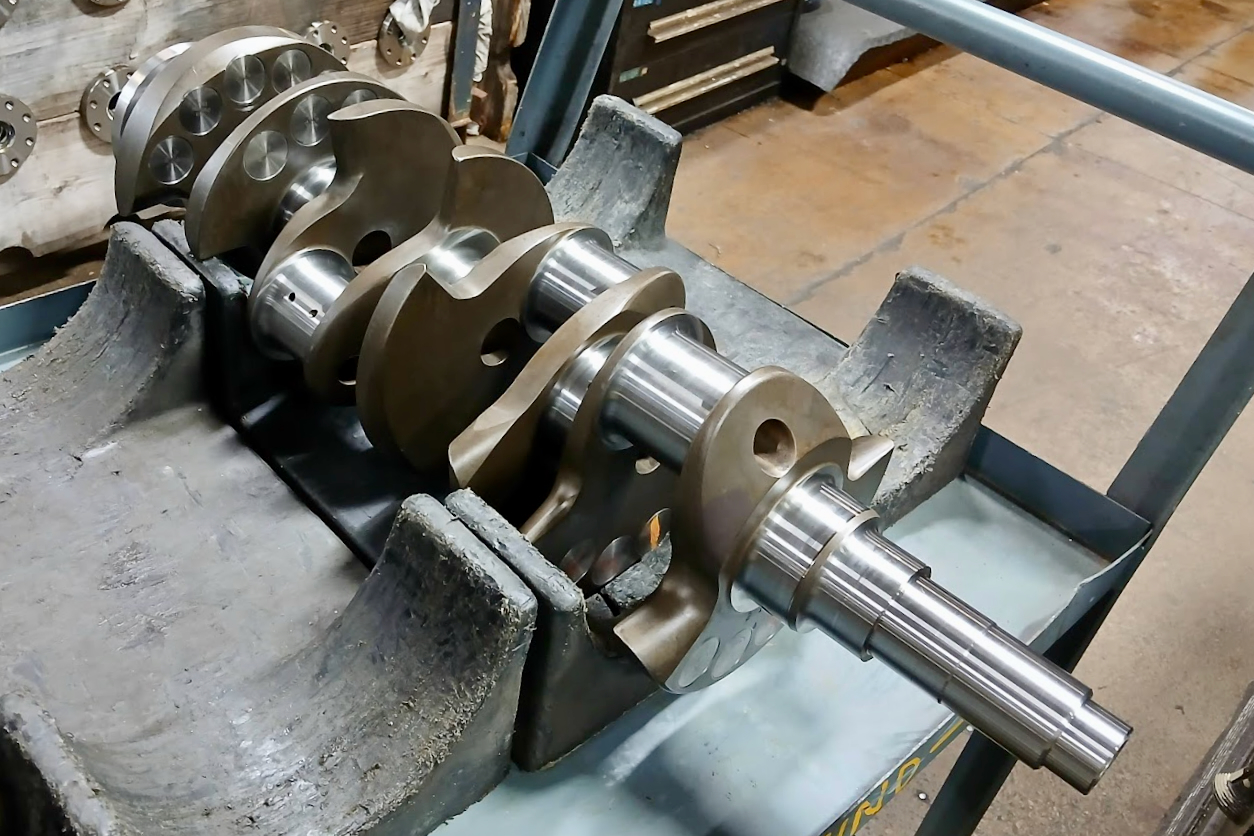
“Ideally, with a twisted forging, we can make the crankshafts exactly how we want them. A non-twist forging ends up with more material than we really need, and then we have to machine it away,” explains Norris, adding that the die manufacturer produced the best possible product but there were only a limited forgings made before repairs or replacement of the die was required. “That’s probably the reason no one else has gone into forging EN30B material.”
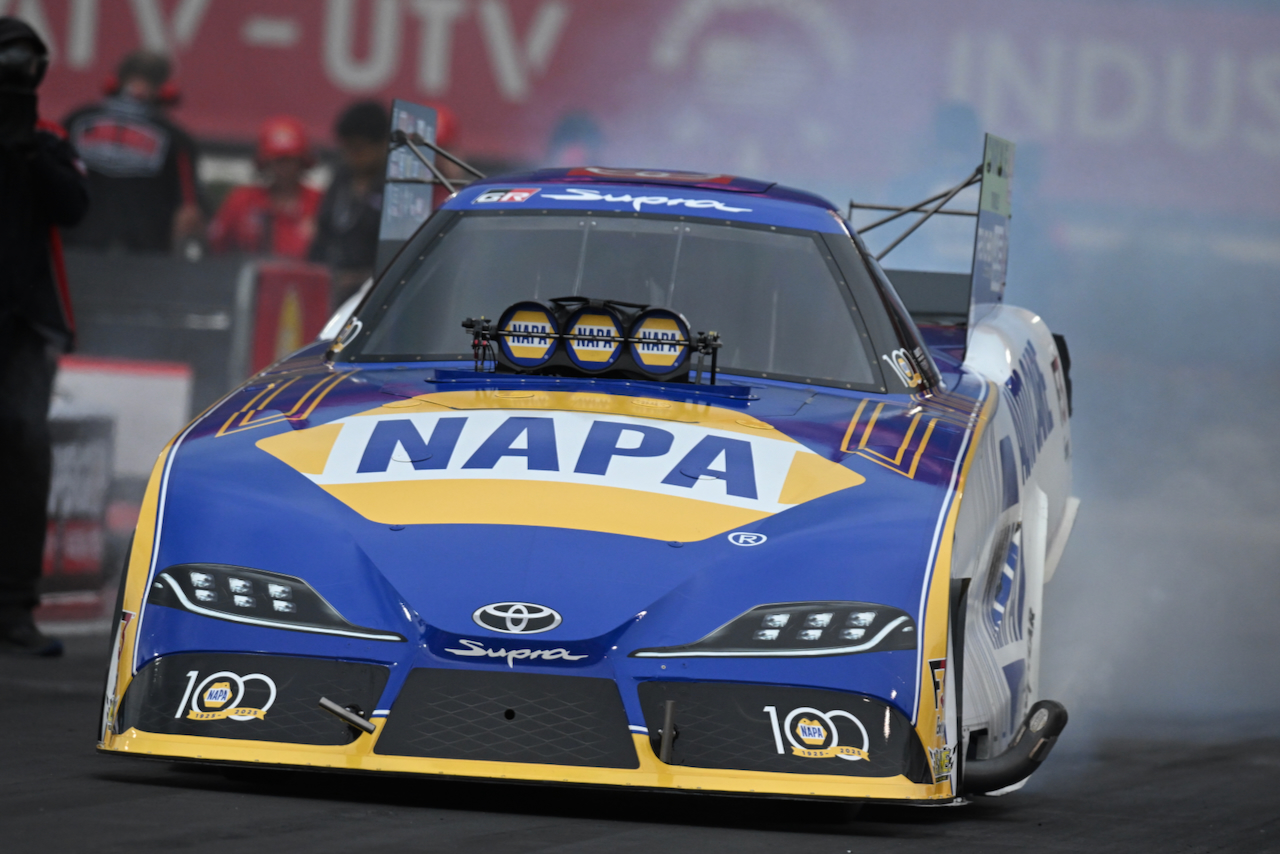
Once the exclusivity agreement between Kalitta and Callies expired, the new crankshaft forgings were made available to select nitro teams, including Ron Capps Motorsports. Funny Car crew chief Dean “Guido” Antonelli, who has orchestrated more than 75 nitro victories in his career was impressed but cautious after receiving his first test units.
“At the time, we weren’t really married to any one crankshaft. We rotate manufacturers so we always have cranks in stock,” remembers Antonelli. “The lifespan with the Callies crank is more than the others. Going 14 runs is a pretty good percentage savings during the course of a year, because cranks are one of the more expensive perishables.”
Unlike other forms of highly competitive motorsports where engine components have well-defined lifecycle limits—usually expressed in recorded revs—Top Fuel parts analysis is much more fundamental. It isn’t a question of calculating a fatigue limit, it’s simply looking for damage.
“The racecar determines it,” says Antonelli, speaking to TorqueJournal at the Brisol, Tennessee, NHRA race. “Even on the best run on a nitro blown car, they detonate. And when they’re detonating, they’re ratcheting the crankshaft. The happier the engine is, the longer crank life. So, you watch the bottom end closely.”
When the engine is torn down and serviced between runs, a crew member will use a flashlight and brake cleaner to inspect all the journals and radii.
“You’ll may see diagonal cracks grow somewhere around seven to nine runs. And then you just watch them. Either they connect or get X-long, then that’s the life of the crank,” says Antonelli. “And if it gets to 12 or 14 on Q4, you just make a call to change it. You don’t want to go into Sunday knowing you’re going to have to change a motor in the second round. You change at that point and you may freshen it up when you get back to the shop.”
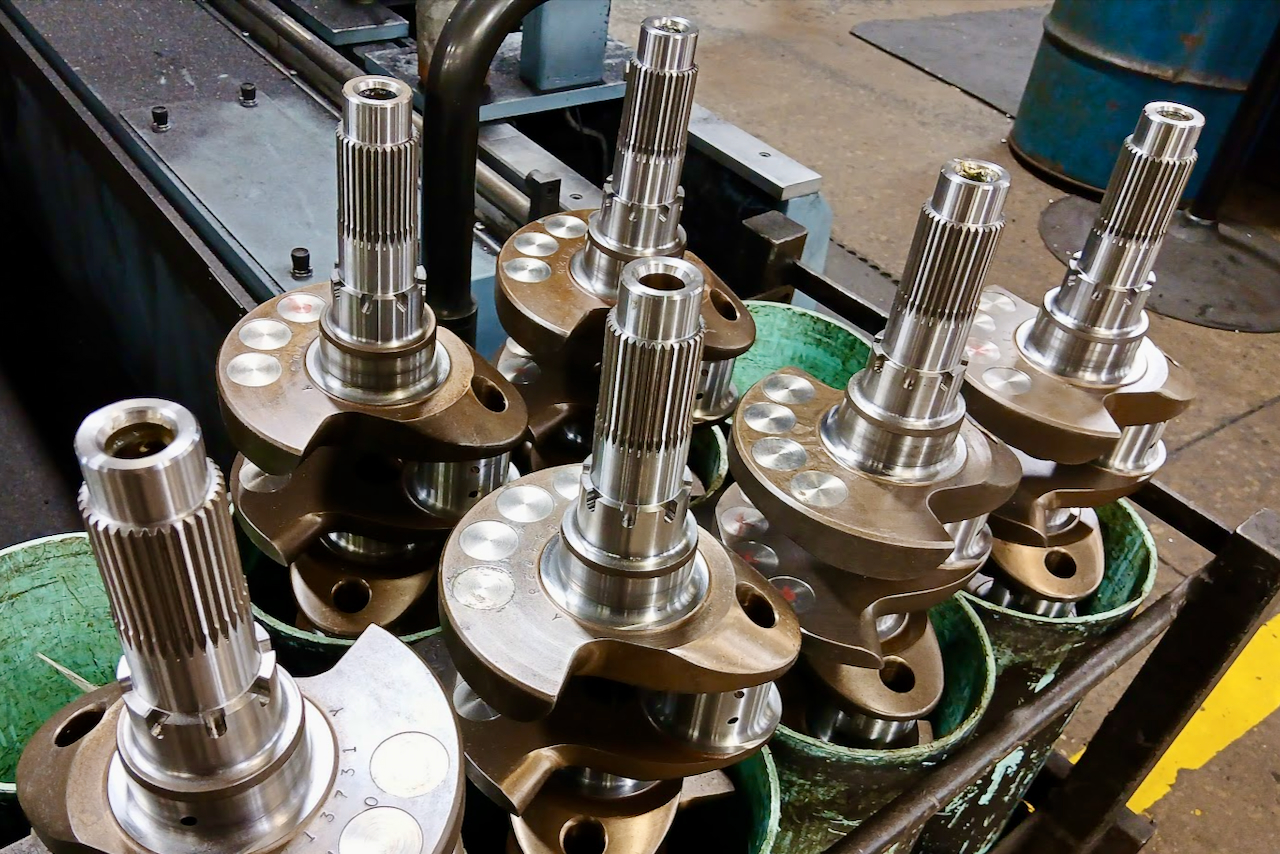
Top Fuel crankshafts feature a 4.500-inch stroke and are designed with eight counterweights. Callies balances each unit to customer-supplied specs. While some crew chiefs prefer an aggressive overbalance strategy, Norris says they don’t steer teams in either direction. Instead, they focus on achieving precision in balance.
“We’re sometimes putting heavy metal in three counterweights deep on each end,” Norris explains. “It’s not ideal for bearing wear, but you need the mass to balance the crank for those 3,100-gram bob weights.”
When Antonelli received the first Callies forging for pre-season testing in Florida, balance was an initial concern.
“It had a different balance so I was a little bit nervous. On the first test run, I told Ron we we’re trying a different crank and if there was a vibration or anything, we’d shut it off and change it,” remembers Antonelli, noting that the engine warmed up fine and he told Capps to report back if there was anything odd during the burnout. “Our burnouts are around 6,000 rpm and everything was fine. The first run was just half track with no difference. Next run we took it to the lights.”
The most ambitious detour in the project was an attempt to bring OEM-style rolled fillets to the Top Fuel world.
“In OEM crankshafts, you don’t see traditional fillets anymore. They use rolled undercuts that increase surface area and distribute stress better,” Norris explains. “We tried pursuing that for Top Fuel.”
Callies sent raw forgings to Hegenscheidt MFD in Germany in an effort to replicate the process. But the complexity of rolled-fillet geometry—and the lack of OEM-level resources—ultimately shelved the idea.
“Figuring out the size, the pressure, the position—it’s an engineering challenge on another level. But we tried. It just shows how far we were willing to go to make a better crankshaft,” he adds.
While rolled fillets never made it to production, other innovations did. Working with bearing manufacturers, Norris’s team was able to design larger fillets by narrowing the bearings—gaining strength without compromising bearing performance.
In the end, Callies’ development of a ground-breaking Top Fuel forging wasn’t just about metallurgy or geometry. The effort embraced persistence, partnerships, a willingness to fail and relentless problem solving in the true spirit of racing innovation.
“It’s definitely been a positive for the team,” sums up Antonelli. “It’s a more controlled part when it’s a forging.”